Matanuska-Susitna Borough

outreach

Contact

If you have any questions please contact the Permit Center or FEMA.

MSB Permit Center

Phone

861-7822

Email

PermitCenter@matsugov.us

Federal Emergency Management Agency(FEMA)

Phone:

1-800-427-4661

Website

http://www.fema.gov

Regulatory changes to flood insurance rates and subsidized policies, will affect MAT-SU Borough property owners living in a Special Flood Hazard Area. See the attached Biggert-Waters Presentation for more information.

A Flood Plain Development Permit is required prior to rebuilding or any other development within a Federally Designated Flood Hazard Area.

To determine if your project is within a Designated Flood Hazard Area please contact the Permit Center and request a “Flood Hazard Determination. Please provide the street address, subdivision name, lot and block, or the township, range, section, and parcel number.

If your property is located within the 100 year flood, there is at least a 1% chance each year the land may be subject to a "100 year" flooding event.

In an effort to reduce losses associated with these flooding events and reduce the amount of losses, the Federal Government, through the Federal Emergency Management Agency (FEMA), requires all structures to obtain Flood Hazard Insurance. To be eligible to receive Flood Hazard Insurance all new development must conform to the minimum standards of development as described in MSB 17.29 Flood Damage Prevention.

A complete application must include both the MSB Flood Hazard Development Permit and the Elevation Certificate. A Registered Engineer or Surveyor must complete the elevation certificate.

Are you living in a flood zone? If so there are things you need to know.

Pt Mac The MSB Assembly created the Point MacKenzie Townsite through Resolution 13-007 "in anticipation of, and as a demonstration of support for a bridge across the Knik Arm...supports layout, planning and development of town sites on public land adjacent to Alsop Road..."

The Knik Arm Bridge is a legislative priority of the Borough. It will provide access to developable lands for commercial, industrial, and residential uses. With over 60% of Alaska's population residing in the Matanuska-Susitna and Anchorage, comprising the largest and strongest regional economy, there will be an immediate development pressure as a result of the bridge in the community of Point MacKenzie.

In anticipation of the Knik Bridge, the Assembly identified as the townsite approximately three square miles of Borough owned land along Alsop Road adjacent to Port MacKenzie. With direction by the Assembly, multiple Borough Departments are collaborating on a master plan for the Point MacKenzie Townsite. These planning efforts will result in a modern city, focused on a pedestrian friendly main street and downtown core surrounded by mixed use and residential areas, within the identified townsite should the Knik Arm Bridge be built.

Be Prepared

Plan and Prepare for Any Disaster
  • Assemble emergency kits.
  • Keep copies of important documents (passport, driver license, social security card, marriage license, will, deeds, financial statements, etc.) in an offsite location n such as a safety deposit box.
  • To facilitate insurance recovery, include an inventory of your valuables with serial number list of tools and equipment and photographs or video of other valuables.
  • Use a USB jump drive to store these files. Make duplicate jump drives and keep one at home, and one in a safety deposit box or other off-site safe location.
  • Learn how and when to shut off your utilities.
  • Discuss all possible exit routes from each room, building and neighborhood. Ensure that your family has at least two exits from each.
  • Reunification location: choose two places, one outside your home and another outside your neighborhood, like a church, community center, store parking lot, or other open area to meet at if you are separated.
  • Conduct emergency drills and practice “DROP, COVER and HOLD” for earthquakes at least once every six months.
  • Always keep your car’s gas tank at least 3/4 full.
  • Take classes on first aid, CPR and disaster preparedness.
  • Practice your plan once a year. Pick a weekend with nice weather to set up in your yard and use your disaster kit. This allows you to see how well it works and add to it before a real emergency.
Plan and Prepare for Any Disaster, here's how to start.

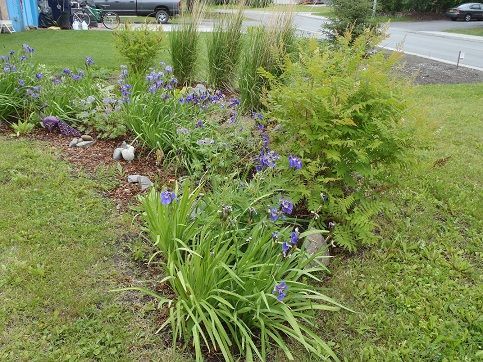
DK Rain Garden 6.14 sm

Rain gardens are vegetated areas built specifically to manage stormwater runoff from driveways, sidewalks, roofs, and other paved surfaces.

Rain gardens slow down stormwater runoff from pavement and rooftops to prevent flooding and erosion.

Rain gardens give stormwater runoff an area to spread for removal of sediment and pollutants.

Rain gardens soak in stormwater runoff to recharge groundwater and wells.

Rain gardens are vegetated areas built specifically to manage stormwater runoff from driveways, sidewalks, roofs, and other paved surfaces.

Every single day we use roads.  They help us get from Point A to Point B, they let us ride our bikes on them, and the nearby sidewalk or pathway is often where we’re taking a stroll.  Have you ever wondered how roads are planned for, built, and who pays for them? Check out the information on this page to learn more about the Lifecycle of a Road.

Every single day we use roads. They help us get from Point A to Point B, they let us ride our bikes on them, and the nearby sidewalk or pathway is often where we’re taking a stroll. Have you ever wondered how roads are planned for, built, and who pays f
Planning